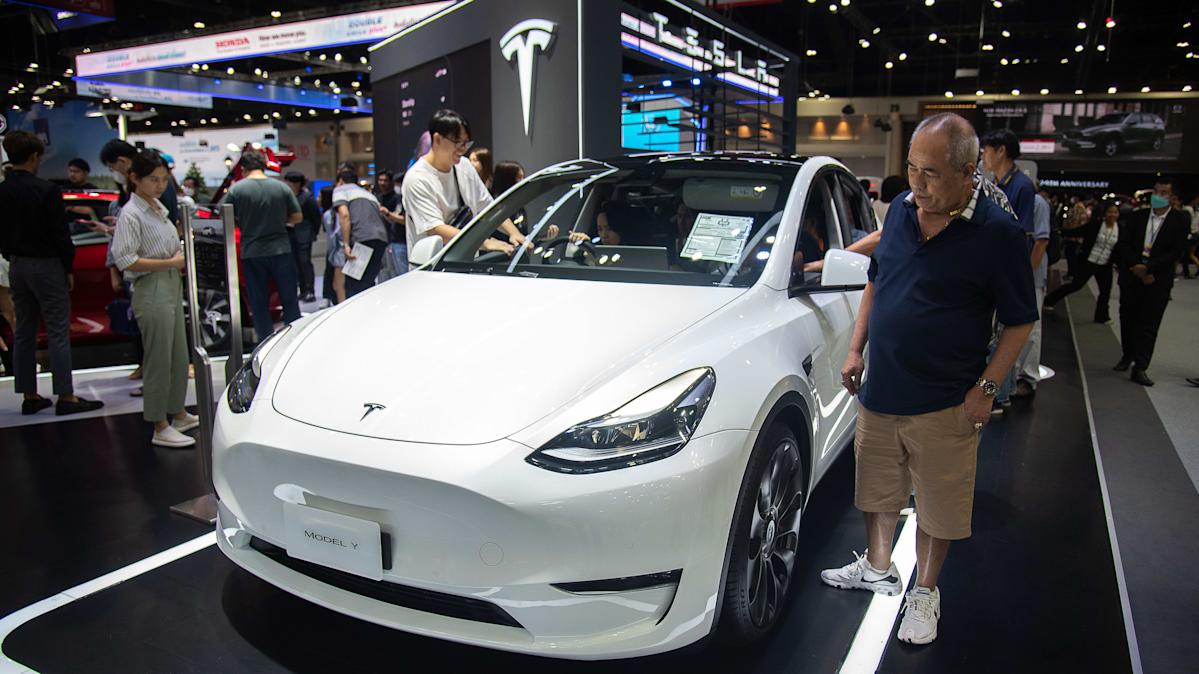
The Model Y Refresh: Reinforcing Core EV Dominance
Tesla, a company synonymous with innovation and disruption, is once again making waves with news of a significant refresh for its incredibly popular Model Y. Far from merely a cosmetic update, this strategic move underscores Tesla's commitment to its foundational electric vehicle (EV) business, even as it pivots towards future-forward technologies. According to reports, a revamped Model Y, featuring more noticeable exterior and interior changes than previous minor updates, is slated for mass production as early as mid-2024 out of its formidable Giga Shanghai plant.
The Model Y is a global bestseller, particularly dominant in the crucial Chinese market where competition from local powerhouses like BYD is fierce. Giga Shanghai's pivotal role, producing over half of Tesla's worldwide deliveries, highlights the immense strategic importance of this refresh. In a rapidly evolving EV landscape, continuous innovation in core products is not just an advantage—it's a necessity. This proactive update aims to:
- Maintain Market Leadership: By introducing fresh designs and improved features, Tesla seeks to stay ahead of the curve and retain its competitive edge against a growing number of formidable rivals.
- Boost Consumer Appeal: A visually updated and potentially more feature-rich Model Y can reignite consumer interest, attracting new buyers and encouraging upgrades among existing owners.
- Optimize Production: Leveraging Giga Shanghai for this mass production initiative allows Tesla to capitalize on its efficient manufacturing capabilities, potentially driving down costs and increasing profit margins per vehicle.
For investors monitoring the Tesla stock revamp, the Model Y refresh demonstrates that the company is not taking its eye off the ball in the automotive sector. Instead, it's a dual strategy: strengthening its core product line while simultaneously venturing into new, high-growth areas.
Beyond the Steering Wheel: Tesla's Robotaxi and AI Vision
While the Model Y refresh reinforces Tesla's EV prowess, the true magnitude of the company's strategic shift lies in its audacious bets on artificial intelligence (AI) and robotics. CEO Elon Musk has made it clear that Tesla's future hinges on its Optimus humanoid robots and the burgeoning robotaxi business, positioning these ventures to become the primary engines for the company's next phases of growth. This represents a profound Tesla stock revamp, moving its valuation narrative far beyond traditional automotive metrics.
The transition is already underway. Reports indicate that Tesla has ceased production of its Model S and Model X vehicles at the Fremont factory, which is being repurposed to produce Optimus humanoid robots. This bold move signals a significant redirection of resources and strategic focus. Musk envisions Optimus not just as a manufacturing tool but as a ubiquitous general-purpose robot capable of performing a vast array of tasks, from industrial applications to domestic assistance.
The Robotaxi Revolution: A Trillion-Dollar Opportunity?
Integral to Tesla's AI future is its robotaxi service, powered by the company's advanced Full Self-Driving (FSD) technology. This vision involves a fleet of autonomous vehicles offering ride-hailing services, dramatically reducing operational costs and potentially unlocking unprecedented revenue streams. The potential impact on Tesla's valuation is staggering. Wolfe Research analyst Emmanuel Rosner projects that Tesla's robotaxi business alone could generate an astounding $250 billion in annual revenue by the middle of the next decade. Based on this sales forecast, Rosner estimates that the robotaxi venture could power a colossal $2.75 trillion increase in Tesla's market capitalization, a significant leap from its current ~$1.5 trillion valuation.
This projection isn't merely speculative; it's rooted in the disruptive potential of autonomous mobility. Imagine a world where vehicle ownership becomes less necessary, and personalized, on-demand transportation is available at a fraction of today's cost. Tesla aims to be at the forefront of this revolution, leveraging its vast data advantage from millions of FSD-enabled vehicles and its integrated hardware-software ecosystem.
Unpacking Tesla's Valuation: More Than Just a Car Company
The evolving narrative around Tesla's strategic shifts profoundly impacts how analysts and investors perceive its stock. For years, skeptics questioned Tesla's elevated valuation compared to traditional automakers, attributing it to hype rather than fundamentals. However, leading analysts like Adam Jonas of Morgan Stanley have consistently argued that Tesla is not merely a car company but a technology and AI powerhouse. Jonas posits that while the core auto business might only account for a fraction of its valuation (estimating around $86 per share), the lion's share comes from its leadership in AI, autonomous driving, and now, robotics. His impressive $380 price target for Tesla stock underscores this belief.
This perspective is critical for understanding the ongoing Tesla stock revamp. The company's unique vertical integration, from chip design (Dojo) to software development (FSD) and vehicle manufacturing, provides a distinct advantage. Furthermore, analysts like Dan Ives from Wedbush remain optimistic about Tesla's delivery targets, noting the company is tracking slightly ahead of its 480,000 unit bogey for the fourth quarter, indicating strong operational execution even amidst its transformative agenda. Ives also highlights a crucial observation: many traditional automotive rivals are delaying or scaling back their EV-related investments. This strategic hesitation by competitors could inadvertently create a longer runway for Tesla to consolidate its lead, not just in EVs, but in the broader intelligent mobility ecosystem.
Practical Insight: For investors, evaluating Tesla stock means looking beyond quarterly vehicle delivery numbers. While these remain important indicators of operational health, the long-term growth story is increasingly tied to the progress and monetization of FSD, Optimus, and the robotaxi network. Key metrics to watch include FSD adoption rates, progress in regulatory approvals for fully autonomous operations, and updates on Optimus development and deployment.
Strategic Investment and Future Outlook for Tesla Stock
Tesla's dual strategy—fortifying its core EV business with crucial updates like the Model Y refresh, while aggressively investing in AI, robotics, and robotaxis—positions the company for a future that extends far beyond automotive manufacturing. This comprehensive approach signifies a deliberate Tesla stock revamp, aiming to secure dominance across multiple high-growth technological frontiers.
The optimism surrounding Tesla’s future is palpable among many analysts. The combination of sustained EV demand, operational efficiencies (as evidenced by robust delivery figures), and the immense potential of its AI/robotics divisions paints a compelling picture. However, such ambitious shifts are not without challenges. Regulatory hurdles for autonomous driving, intense competition in both the EV and AI spaces, and the inherent complexities of developing and scaling advanced robotics are significant factors that could influence the timeline and success of Tesla's ventures.
Actionable Advice: Investors considering Tesla stock should understand the company's evolving risk-reward profile. While the potential for exponential growth from robotaxis and Optimus is high, so are the risks associated with novel technologies. Diversification within a portfolio remains key, and a long-term perspective is crucial when investing in a company undergoing such a transformative strategic shift.
Conclusion
Tesla is undeniably in the midst of its most ambitious transformation yet. The forthcoming Model Y revamp signals a continued commitment to its successful EV product line, ensuring it remains competitive and appealing to a global customer base. Simultaneously, the aggressive pivot towards AI-driven robotaxis and humanoid robots like Optimus represents a bold bet on the future, promising to unlock unprecedented revenue streams and fundamentally redefine Tesla's identity. This multi-pronged Tesla stock revamp narrative is set to dominate investment discussions for years to come, as the company endeavors to transition from a leading EV manufacturer to a comprehensive AI and robotics powerhouse, potentially reshaping entire industries in the process.